MONDAY MUSINGS SEASON 2 - EPISODE 353
16th February 2026
Four factor analysis for actions
Work in the mode of Goodness
नियतं सङ्गरहितमरागद्वेषत: कृतम् | अफलप्रेप्सुना कर्म यतत्सात्त्विकमुच्यते |||(Bhagavad Gita 18.23)
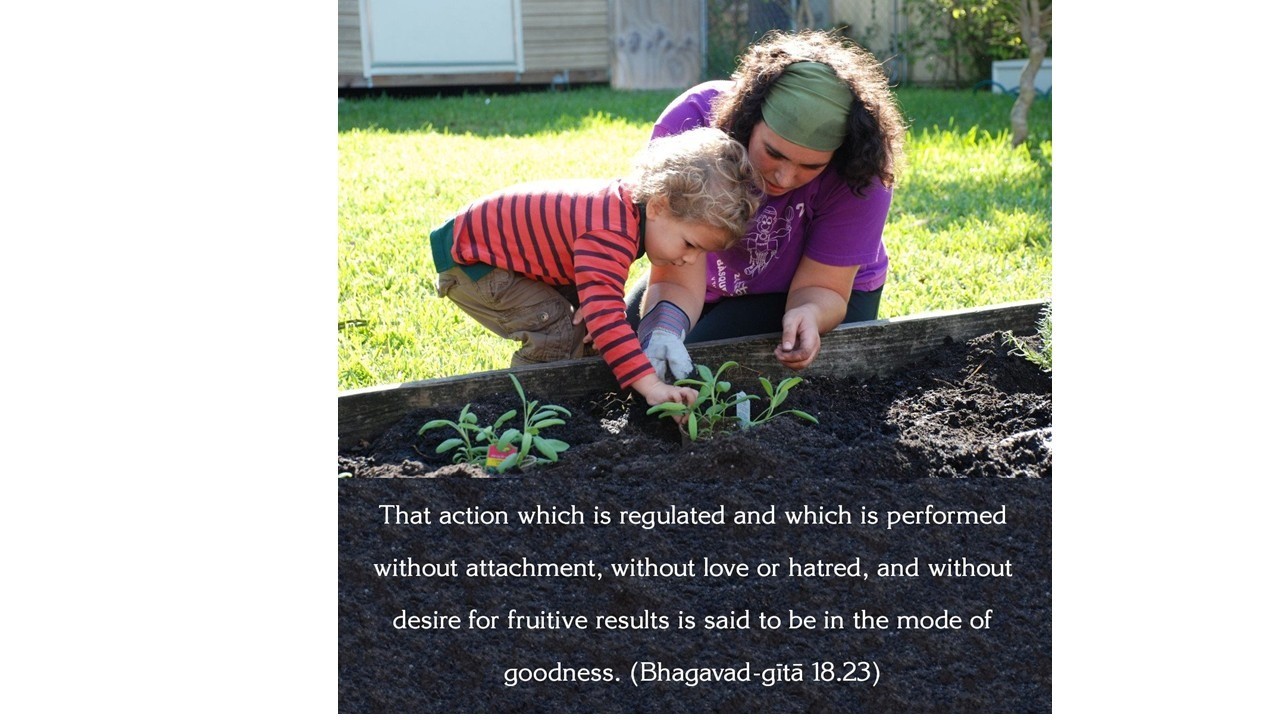
Action that is in accordance with the scriptures, free from attraction and aversion, done without desire for rewards, and performed without attachment to the task is in the mode of goodness.
We perform multiple actions every day. Lord Krishna categorizes these actions as actions of goodness, actions of ignorance and actions of passion. Let us first define actions of goodness.
Lord Krishna sets out a four-factor test to determine which actions are good. These four factors are:
1. Niyatam – Many translations / interpretations of the #BhagavadGita attribute niyatam to ‘what is stated in the sastras’. The sloka makes no direct reference to the sastras. The literal translation of the word niyatam is ‘disciplined’ or ‘regulated’. My take is that the first attribute of positive work is that it should be disciplined and acceptable to society. Reference to the sastras would have arisen because they invariably preach discipline and what is acceptable to society.
2. Aphala-prepsuna – Actions performed without desire for the results. #BhagavadGita reiterates this through multiple slokas. Work to be performed as a duty rather than for the benefit that would accrue from the work. This relieves the mind from the pressures of performance and worries of failure.
3. Sanga-rahitam – Performing a work without getting attached to the work, without any feeling of doership. This ensures keeping the ego in check.
4. Araga-dveshath – Actions performed without the feeling of attraction and aversion ie not doing because it is pleasurable and not avoiding a work because it is painful (We have seen comfort zone in the last episode)
Our work is good only when it meets all four attributes above. Even actions that are perfectly in accordance with the sastras may not be good enough if the other three conditions are not met.
Niyatam is one simple word but it is difficult to include which actions are as per niytatam and which are not. This has changed as society has evolved.
Evolution of niyatam
Throughout history, many social scientists and philosophers have offered their opinions on what constitutes proper action. A few of the important ones and their philosophies are reproduced below:
#Epicureanism is an ancient Greek philosophical system founded by Epicurus (c. 307 BCE) that defines the highest good as pleasure, specifically understood as the absence of pain (aponia) and fear (ataraxia). It promotes a simple, moderate life, intellectual pleasures, and friendship over intense, temporary, or extravagant sensual indulgence, especially that arising from needless fear of death and of the gods.
More refined was the philosophy of Hobbs of England (1588 – 1679). He is considered to be one of the founders of modern political philosophy. He advocated governance by an absolute sovereign in Leviathan, as the solution to human conflict and societal breakdown.
Joseph Butler (1692–1752) defined conscience as an innate, God-given faculty of reflective reason that acts as the supreme, authoritative guide in human moral decision-making. It is a natural, intuitive principle that governs passions, self-love, and benevolence, allowing individuals to judge the morality of their own actions and intentions. Butler’s ethics emphasize that virtue is natural, while vice is unnatural. #TheoryOfConscience is probably the first scientific definition of niyatam.
However, the problem is that everyone’s conscience guides differently. Besides, even one person’s conscience changes over time.
#Utilitarianism is a consequentialist ethical theory determining right from wrong by focusing on outcomes, advocating for actions that maximize overall happiness and well-being while minimizing suffering. Founded by Jeremy Bentham and refined by John Stuart Mill, it promotes the "greatest good for the greatest number". It operates on the principle that the morality of an action is based solely on its ability to produce the best consequences, treating all individuals equally.
The Mahabharat gives a much better approach for disciplined work:
ātmanaḥ pratikūlāni pareśhāṁ na samācharet
śhrutiḥ smṛitiḥ sadāchāraḥ svasya cha priyamātmanaḥ (5.15.17)
“If you do not like it when others behave with you in a certain way, then do not behave with them in that way either. But always verify that your behavior is in accordance with the scriptures.”
Conduct yourself with others as you desire them to behave with you.
The Bible also says the same, Luke 6.31 known as the #GoldenRule says "Do to others as you would have them do to you"
Shree Krishna refines this further. In addition to the discipline aspect of the work, Shree Krishna suggests three other attributes of good work.
__________________________________________________________________________
#PositiveNewsPage
This week’s positive news page covers 3 positive developments I have come across this week.
India AI Impact Summit
The first, of course, is the #IndiaAIImpactSummit2026, inaugurated today in New Delhi. The India AI Impact Summit 2026 is a flagship global gathering hosted by the Government of India under the IndiaAI Mission. With global political and technological leaders converging in India, this is proving to be a defining moment for India in AI.
Why so much fuss about AI? Having established a leadership position in IT, India cannot afford to lose the AI race. The summit is a good beginning in that direction.
என்று தணீயும் இந்த சுதந்திர தாகம்
Happened to attend the release event of a good tamil book and also to read the book. என்று தணீயும் இந்த சுதந்திர தாகம் is a historical fiction written by Ramnath Gopalan based on events documented during India’s independence struggle. This is a well-researched story that documents different perspectives on the struggle for India’s independence. Good reading.

#SelectAndDelete
My fourth book, ‘Select And Delete’, is finally ready, and the release date is set for 22nd April 2026.
This is a unique story tracing the developments in the field of Information Technology over the past 40 years, from mainframe computing to AI and robotics, set against the backdrop of a crime fiction that is resolved after 30 long years of effort by two generations of a family.
Reserve your copies by sending an email to radhikasingh@myperito.com
_______________________________________________________________________________
Conceived, compiled and posted as a weekly positive newsletter #MondayMusings every Monday by Jaganathan T (www.authorjaganathan.com).
_______________________________________________________________________________
PROMOTIONS
