MONDAY MUSINGS SEASON 2 - EPISODE 348
12th January 2026
Commitment to duty
WISHING THE READERS HAPPY PONGAL, MAKARA SANKRANTI, BIHU
I have heard from a few that one should shun worldly affairs and focus only on religious activities. With due respect to them, Lord Krishna himself clarified his views in contrast. This comes in #BhagavadGita 18.7
Commitment without desires
नियतस्य तु सन्न्यास: कर्मणो नोपपद्यते । मोहात्तस्य परित्यागस्तामस: परिकीर्तित: (Bhagavad Gita 18.7)
Prescribed duties should never be renounced. If one gives up his prescribed duties because of illusion, such renunciation is said to be in the mode of ignorance.
Renouncing prohibited actions and unrighteous actions is proper; renouncing desire for the rewards of actions is also proper. Lord Krishna communicated these two through multiple slokas in the Bhagavad Gita. But renouncing prescribed duties (as a means to stay away from material interest) is never proper.
The general perception is that leading a contented, religious life without desires by taking sanyas is the best service to God. Hindu philosophies advocate strongly against desires, no doubt. But they advocate strongly against ignoring responsibilities as well. The solution is to give 100% commitment to the responsibilities, without desiring the results.
This world cannot run if everyone becomes a sanyasi. This world has become an interesting place to live, and the services of various stakeholders are essential to making it livable and enjoyable, including art & entertainment. Materialistic ambitions have become essential for living. People should take up the duties assigned to them and perform them with commitment. Prescribed duties help purify the mind and elevate it from tamo guṇa to rajo guṇa to sattva guṇa. Not only that. Commitment to the duties ensures satisfaction and happiness for the person.
Abandoning them is an erroneous display of foolishness. Shree Krishna states that giving up prescribed duties in the name of renunciation is said to be in the mode of ignorance.
Having come into this world, we all have obligatory duties. Fulfilling them helps develop many qualities in an individual, such as responsibility, discipline of the mind and senses, tolerance of pain and hardships, etc. Abandoning them, out of ignorance, leads to the degradation of the soul. These obligatory duties vary according to one’s level of consciousness. For an ordinary person, acts such as earning wealth, taking care of the family, etc., are also prescribed duties. As one gets elevated, these obligatory duties change. For an elevated soul, sacrifice, charity, and penance are the duties.
Through this clarification, Lord Krishna advocates the principle that commitment to your duty is service to God. This idea could be seen across various religious and philosophical traditions, particularly in Christianity.
God loves and protects those who give 100% commitment to their duties. Don’t be ashamed of setting up a materialistic target. God wants you to have ambitions and grow well in life but without desires on the results!
Artist who sold after death
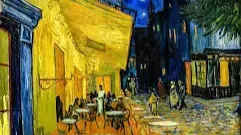
#VanGogh is a world-famous artist. Starry Night, Bedroom in Arles, and Café Terrace at Night are among his famous paintings. An interesting fact is that Van Gogh sold only one painting during his lifetime. In other words, he went to the grave thinking that he was a failed artist.
Though Van Gogh might not have benefited from fame or fortune in his lifetime, he remained committed to realising his artistic vision. While no one was interested in buying his paintings when he was alive, Van Gogh continued pouring his heart and his soul onto his canvases for a decade. Over time, that commitment paid off; Van Gogh is routinely included among the greatest painters of all time.
Van Gogh, the eldest of six children of a pastor, was born and reared in a small village in the Netherlands. Van Gogh worked as a language teacher and lay preacher in England during his early career. His approach to life darkened when his love was rejected by a London woman. His burning desire for human affection thwarted, he became increasingly solitary.
Later, he worked for a bookseller in the Netherlands. Impelled by a longing to serve humanity, he envisaged entering the ministry and took up theology; however, he abandoned this project for short-term training as an evangelist in Brussels.
He experienced his first great spiritual crisis when he was 26. Living among the poor, he gave away all his worldly goods in an impassioned moment; he was thereupon dismissed by church authorities for a too-literal interpretation of Christian teaching. Penniless and with a feeling that his faith was destroyed, he sank into despair.
It was then that van Gogh began to draw seriously, thereby discovering his vocation as an artist. Van Gogh decided that his mission from then on would be to bring consolation to humanity through art. Realization of his creative powers restored his self-confidence.
Van Gogh’s artistic career was extremely short, lasting only 10 years. During these years, his art grew bolder and more assured. He painted three types of subjects—still life, landscape, and figure—all interrelated by their references to the daily life of peasants, the hardships they endured, and the countryside they cultivated.
Feelings of guilt at his financial dependence on his brother and his inability to succeed depressed him and he started showing symptoms of mental disturbance. Van Gogh shot himself when he was just 37, perhaps in despair of ever being able to overcome his loneliness or be cured. He became a celebrity after his death.
______________________________________________________________________________________
Conceived, compiled and posted as a weekly motivational newsletter by Jaganathan T (www.authorjaganathan.com)
______________________________________________________________________________________
PROMOTIONS
